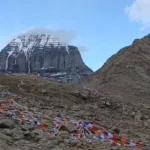
Travel documents for Kailash Tour with Saga Dawa Festival
First, you need to obtain a Chinese Visa. With your Chinese visa and a valid passport, you can apply for the Tibet Travel Permit. As Mount Kailash is situated in the remote western part of the Tibet Autonomous Region, additional travel documents are required for your visit, such as the Alien’s Travel Permit and the Military Permit.
All necessary documents for visiting Mount Kailash (except for your Chinese Visa) are included in our packages. We guarantee the Tibet Travel Permit and other permits to ensure a worry-free Mount Kailash experience for you. Just make sure to obtain your Chinese Visa in advance.
Booking Mount Kailash Saga Dawa Festival Tour in Advance
Generally, it takes around 7 to 14 working days to process the Tibet Travel Permit. Given the additional travel permits required for a trip to Mount Kailash, the processing time could be longer than for ordinary Tibet tours. It is recommended to book your Mount Kailash tour at least 30 days in advance to allow sufficient time for processing all required paper applications.
Best Season for Mount Kailash Tour with Saga Dawa Festival
Mount Kailash is accessible year-round, excluding harsh winter conditions. The best months for clear mountain views and pleasant weather are May, June, September, and October.
For a rich cultural experience, you can visit Mount Kailash during the Saga Dawa Festival in May or June (April 15 in the Tibetan Calendar), to experience how the pilgrims celebrate the birth, enlightenment, and nirvana of the founder of Buddhism, Sakyamuni. This is a rare opportunity to immerse oneself in the strong religious atmosphere and join the kora with devoted pilgrims.
Altitude along the way from Lhasa to Mount Kailash Saga Dawa Festival Tour.
Mount Kailash is 6638 meters above sea level, and the highest point you will pass during your Mount Kailash trek is the Dromala Pass, which is 5630 meters above sea level. From Lhasa to Mount Kailash, the altitude rises from 3658 meters to over 4500 meters in the Ngari Plateau. En route, you will visit Mount Everest and stay one night at Everest Base Camp at 5200 meters above sea level.
Our well-planned itinerary ensures a gradual adjustment to higher altitudes. Equipped with oxygen tanks, our tour vehicles prioritize your comfort. If you encounter altitude sickness symptoms like headaches or dizziness, inform your guide promptly for professional assistance.
Difficulty of Kailash Tour with Saga Dawa Festival
This is a moderate trekking tour in Tibet, which is suitable for those with an average level of fitness. You need to trek for 3 days at an average altitude of over 4500 meters, with the highest point reaching 5630 meters at Dromala Pass.
If you just want to see Mount Kailash, without trekking, you can stay in Darchen at the foot of Mount Kailash to wait for other group members to complete the trek. During these days, you can explore the local village and visit the local monasteries.
Age limit for Mt Kailash Saga Dawa Festival Tour
No, there isn’t any age limit for trekking around Mount Kailash. Our oldest client successfully completed both the Everest Base Camp and the Mount Kailash Kora at the age of 82.
More crucial than age is one’s physical condition. Individuals with cardiovascular and cerebrovascular conditions are not recommended to visit Tibet. Additionally, it is advised to avoid bringing children under 5 years old to remote areas like Mount Kailash due to limited facilities.
Packing Equipment for Mount Kailash Saga Dawa Festival Tour
In addition to personal hygiene essentials, whenever you visit Tibet, sun protection is a must. Alongside a high SPF sunscreen, don’t forget to pack physical sun protection gear like sunglasses and a hat – they’re absolute essentials.
With an average altitude of over 4500 meters in the Ngari region, temperatures can dip lower than those in Lhasa. This difference is especially noticeable during treks, where mornings and evenings can have significant temperature variations. So, apart from comfortable and warm sportswear, having easily removable outer layers is crucial.
Furthermore, ensure you have comfortable hiking shoes. You might also want to consider bringing along portable trekking poles, or you can opt to rent ours.
Selecting the right backpack to carry your belongings during the trek is important. Of course, you have the option to hire a porter to carry your luggage, but keep in mind that this comes with a higher cost. After confirming your tour, we’ll send a detailed packing list for your reference and preparation.
A porter cost for a 3-day Kailash Trek
If you are concerned about trekking with heavy luggage, consider booking a porter service upon your arrival in Darchen. The cost for Mount Kailash porters is approximately 330 RMB per day, subject to actual conditions. You can share the cost with fellow group members who require a porter. Just inform your guide upon reaching Darchen if you need this service.
Road condition from Lhasa to Mount Kailash
The road from Lhasa to Mount Kailash almost follows the national highway from Lhasa to Kashagar, Xinjiang. The entire route is well paved, except for a gravel stretch near Lake Manasarovar.
We ensure your travel in well-maintained vehicles, driven by experienced local Tibetan drivers. You can have complete confidence in them, allowing you to sit back, relax, and fully enjoy the thrilling adventure to Mount Kailash and Lake Manasarovar.
Accommodation during Kailash Kora Trek
No, camping is not necessary during the kora around Mount Kailash. While the accommodation conditions at Mount Kailash are relatively basic, you have the option to secure a bed in monastery guesthouses.
Typically, the guesthouse rooms accommodate 3 to 4 people, and only shared toilets are available on each floor. As there are no private bathrooms or bathing facilities, it’s advisable to bring wet wipes for basic cleanliness.
Meals during Kailash Saga Dawa Festival Tour
While trekking around Mount Kailash, don’t expect traditional restaurants. Instead, monastery guesthouses offer basic eateries, and you’ll find tented teahouses between key stops, like Dirapuk Monastery or Zutulpuk Monastery, where you typically stop for lunch.
However, the food choices are limited to basic local options. To ensure a satisfying meal, consider bringing your own dried and packaged foods, as the monastery offerings are generally below par.
Opting for tented eateries and teahouses is a better choice, providing simple essentials like instant noodles and hot water, ideal for lunch and dinner on the Kora route.